
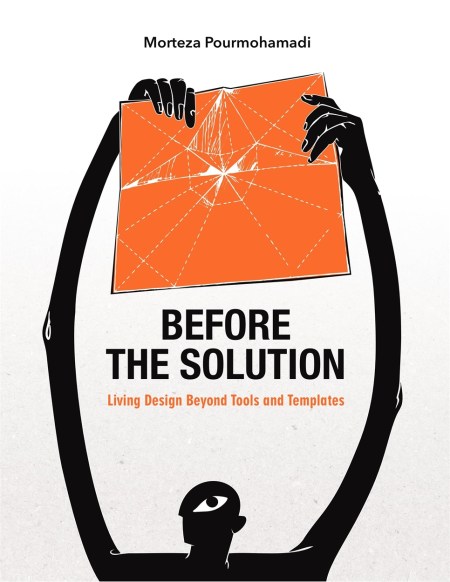
Design is a deeply human capability, yet it is increasingly practised through tools, templates, and now AI. These can generate polished, method-first outputs at scale, but the risk is growing, work that looks right, yet lacks depth, character, and humanity.
If you have ever felt your process is “correct” but your outcomes are interchangeable, you are not alone. In Before the Solution, you will build the habits and rituals that sit underneath the methods. Written for early-career designers and students, and useful to anyone in tool-heavy settings, it focuses on the part of practice you can train without a brief in front of you.
How you sit with a problem before reaching for a template, how you let a prototype change the question, how you decide what to ignore, and how you stay in charge when AI is in the room. The distinctive move is simple. It invites you to look beyond the solution itself. Across six chapters you take up the companions a designer lives with for a whole career, the discipline, yourself, other people, AI, problems, and solutions. Each chapter blends short narratives, distilled research from design cognition, and actionable exercises, supported by visual material you can return to as part of a routine.
This is not a replacement for your method handbooks. It is what makes them work.
If you have ever felt your process is “correct” but your outcomes are interchangeable, you are not alone. In Before the Solution, you will build the habits and rituals that sit underneath the methods. Written for early-career designers and students, and useful to anyone in tool-heavy settings, it focuses on the part of practice you can train without a brief in front of you.
How you sit with a problem before reaching for a template, how you let a prototype change the question, how you decide what to ignore, and how you stay in charge when AI is in the room. The distinctive move is simple. It invites you to look beyond the solution itself. Across six chapters you take up the companions a designer lives with for a whole career, the discipline, yourself, other people, AI, problems, and solutions. Each chapter blends short narratives, distilled research from design cognition, and actionable exercises, supported by visual material you can return to as part of a routine.
This is not a replacement for your method handbooks. It is what makes them work.